
Stop Water Damage Fast Before It Soaks Your Home
Knowing how to shut off your water fast can be the difference between a quick mop-up and soaked floors, ruined walls, and a long night. When a pipe breaks or a supply line pops loose, water can spread quickly through a Brevard County home, especially when everyone is tired and half asleep.
Picture a stormy October night, rain beating on the windows, and suddenly you hear that awful sound of water spraying behind a wall or under a sink. Every minute you wait, more water spreads into drywall, cabinets, and flooring. If you already know exactly where your main shut-off valve is, and you know it works, you can stop the flow in seconds and buy yourself some breathing room.
We are a local licensed and insured plumbing company serving homes and businesses across Brevard County, and we see these late-night emergencies all the time. We know that a little preparation during calm moments can save a lot of stress when trouble hits. In this guide, we will walk through how to find, test, and clearly label your main shut-off valve so you are ready to act fast when a leak shows up at the worst possible time.
Why Every Brevard County Home Needs a Water Plan
Homes in Brevard County are not all built the same way. Some are older beachside houses with quirky plumbing and hidden shut-offs. Others are newer inland homes with more standard layouts. That mix means the main valve in your home could be in a very different place than your neighbor’s, even if you live on the same street.
Late October is still an active time for heavy rain and storms here. Wind, shifting ground, and pressure changes in the water system can put extra stress on pipes and older shut-off valves. Add in regular daily use, and small weak spots can quickly turn into leaks.
A simple water emergency plan can protect you when that happens. It should answer three basic questions:
- Who is the person in your home that turns the water off?
- Where is the main shut-off valve and how do you get to it fast?
- What are the next steps once the water is off?
Many homeowners wait until they have a problem to think about this, which makes everything feel more stressful. Having a plan means less panic and faster action. An emergency plumber in Brevard County can also look over your plumbing, make sure the shut-off is easy to reach, and help you understand how your system is laid out before something goes wrong.
Finding Your Main Water Shut-Off Valve Fast
The first step is to figure out what kind of water source you have. In Brevard County, homes usually fall into one of two groups:
- City water service
- Private well system
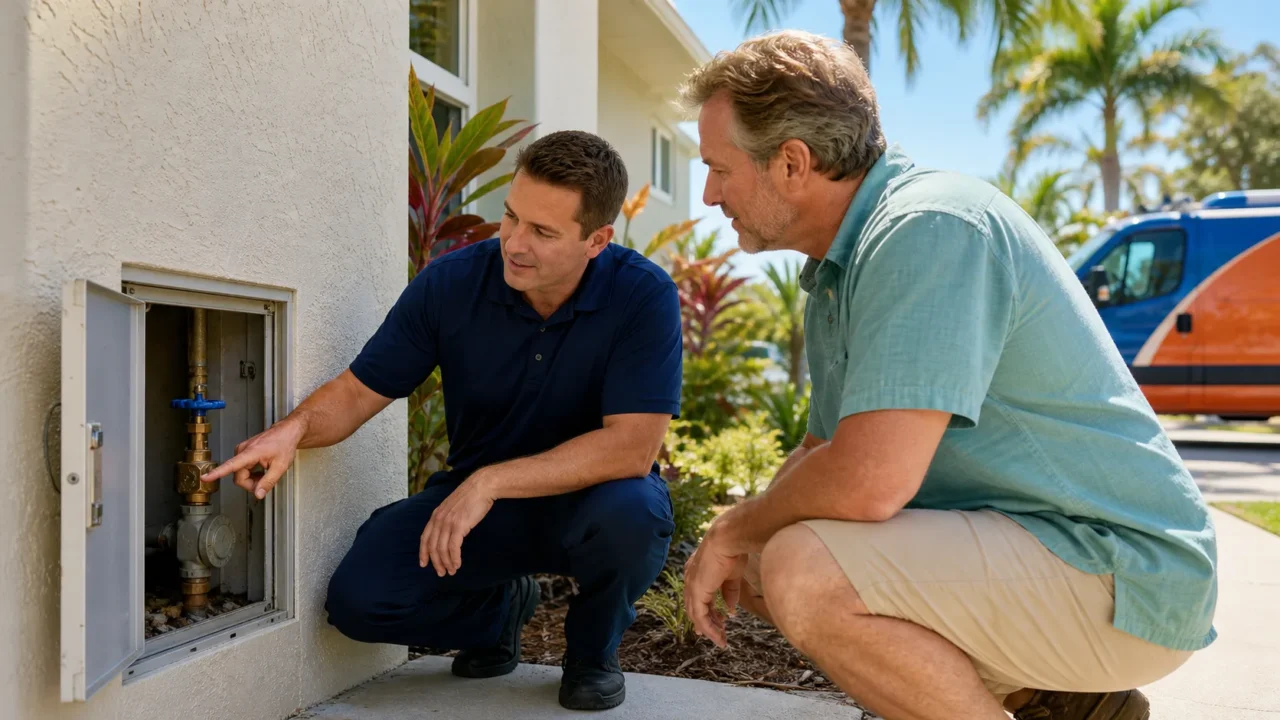
If you have city water, your main shut-off is usually located where the main line comes into the house. Common spots include:
- On the street side wall of the home
- In the garage, near the water heater or laundry area
- In a utility room or closet
- Outside, near the foundation under a spigot or hose bib
- In a ground box close to the street or sidewalk
That box near the street may hold the water meter and sometimes a customer shut-off, but do not assume it is yours to touch unless you are sure. It is safer to rely on the main valve on your property, near where the line enters the house.
If you are on a private well, look in these areas:
- Next to the well pressure tank
- Where the line from the well enters the house through an outside wall
- In a pump house, small shed, or covered enclosure near the well
If you are not sure where to start, try these simple steps:
- Follow any visible water pipes in your garage or utility areas
- Use a flashlight to check low walls, corners, and access panels
- Look along the outside walls for hose spigots or small access covers
- Review your home inspection report or HOA notes for any plumbing diagrams
Do this now, when it is dry and quiet, instead of waiting until you are standing in ankle-deep water with a flashlight and a racing heart. Once you find the valve, clear a path so you can reach it quickly, even in the dark.
How to Safely Test and Label Your Main Valve
After you locate your main shut-off valve, you want to be sure it actually works. Old valves, especially in older Brevard County homes or homes near salty air, can get stiff or fail without warning.
Plan your test for a time when no one needs to shower, cook, or run the dishwasher. Then follow these basic steps:
- Slowly turn the main valve to the off position.
- Open a faucet in a sink or tub and wait for the water flow to stop.
- Once it slows to a drip or stops fully, your valve is doing its job.
- Turn the main valve back on slowly to avoid a sudden rush of pressure.
You will usually see one of two valve types:
- Round wheel or knob, often called a gate valve, that you turn several times
- Lever handle, often called a ball valve, that turns a quarter turn from on to off
A gate valve may feel a little stiff, but it should still move without too much strain. A ball valve handle should move in a smooth, firm motion. If the handle is badly rusted, frozen in place, cracked, or feels like it might snap, stop. Forcing it can break the valve and turn a simple test into a real emergency.
When you work around the valve:
- Wear work gloves to protect your hands
- Be careful around sharp edges or corroded metal
- Do not dig around buried boxes if you see wires or broken covers
Once you know the valve works, make it obvious. Add a bright tag, colored tape, or a clear label that says “Main Water Shut-Off.” Draw a simple sketch of your house and mark the valve location, then snap a photo and save it on your phone. Show everyone in your household where it is and how to turn it off.
If the valve is hard to reach, badly corroded, or does not fully shut off the water, it is a good idea to have an emergency plumber in Brevard County upgrade or replace it before the next big stormy stretch.
What to Do When a Late-Night Leak Hits
When water starts going where it should not, a calm plan is your best tool. Here is a simple order to follow during a late-night leak:
- Stay as calm as you can and go straight to the main shut-off
- Turn off the water supply
- If water is near outlets, cords, or appliances, shut off power to that area at the breaker panel if you can do so safely
- Keep children and pets away from the leak zone
Once the water is off and the area is safe from electrical risks, work on limiting damage:
- Use towels to soak up standing water on floors and furniture
- If you have a wet-dry vacuum, use it to pull up puddles
- Set up fans or open windows if the weather and security of your home allow
- Take photos or short videos of the damage for possible insurance purposes
Some issues can be temporarily contained, like a slow drip from a supply line into a bucket or a small seep at a fitting. Others are true emergencies that should not wait, such as:
- A pipe that burst and flooded a room or hallway
- A slab leak where water is coming from the floor or foundation area
- An overflowing toilet or fixture that will not stop running
During stressful moments, searching online for help while water spreads is the last thing you want. It is smart to store the number of a trusted emergency plumber in Brevard County in your phone ahead of time so you can get professional help lined up as soon as you have the main water off.
Make Your Home Leak Ready Before the Next Storm
One of the best times to prepare is during a quiet fall weekend when you have a little extra daylight and the calendar starts to fill with holidays and events. Set aside a short block of time and create a simple water emergency checklist:
- Find and clear a path to your main shut-off valve
- Test the valve to make sure it actually shuts the water off
- Label the valve and mark its spot on a quick sketch or phone note
- Share the plan with everyone who lives in the home
If you live in an older Brevard County home, or close to the coast where humidity and salty air can be hard on plumbing, it can be helpful to have a professional look things over. Corrosion, shifting soil, and past repairs can all affect how well your shut-off and other key parts of your plumbing system work.
At Orange Plumbing, we help homeowners across Brevard County get ready before trouble strikes, not just after. A main shut-off inspection, a valve upgrade, or a walk-through of your home’s water shut-down steps can give you peace of mind so the next late-night leak is a controlled event, not a crisis. Knowing where that valve is, knowing that it works, and having a simple plan will help keep your home safe when the water decides to misbehave.
Get Fast, Reliable Help When Every Minute Counts
When a pipe bursts or a fixture fails, you need solutions right away, not tomorrow. As your trusted emergency plumber in Brevard County, Orange Plumbing is ready to respond quickly and fix the problem correctly the first time. Reach out to us anytime, and we will walk you through your options so you know exactly what to expect. If you prefer to message us instead of calling, just contact us and we will get back to you promptly.