
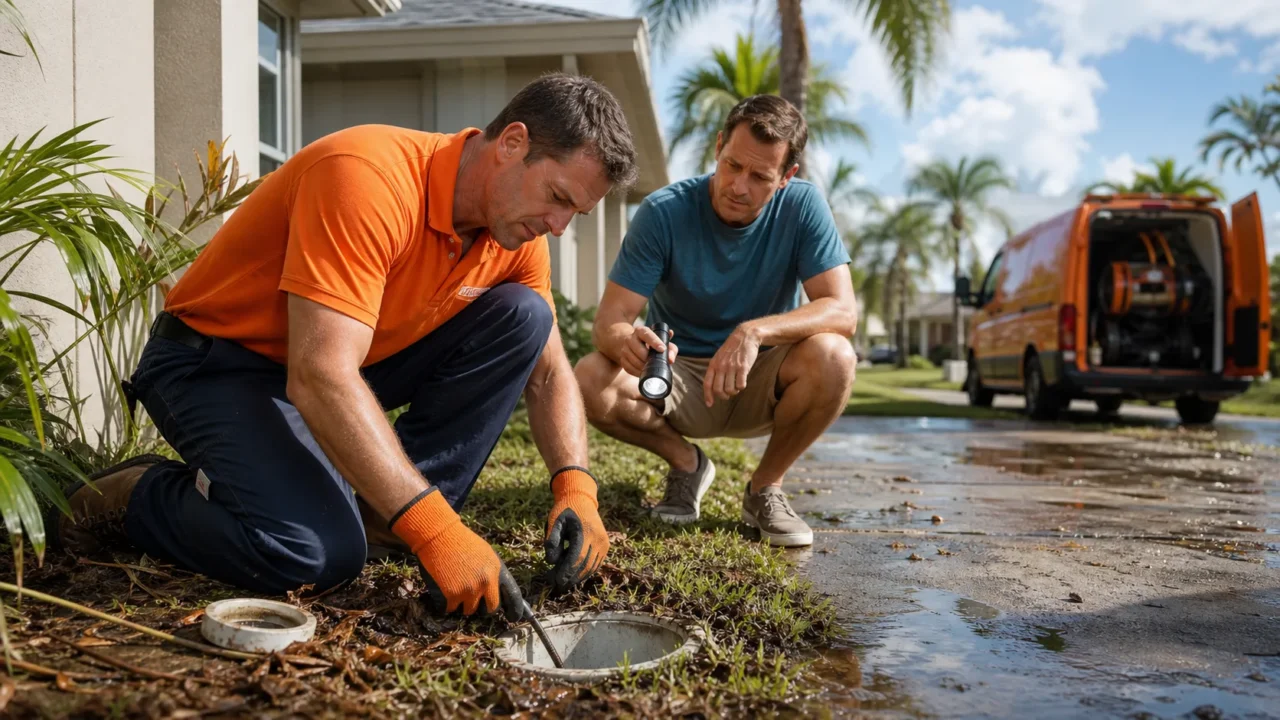
Protect Your Titusville Home After the Next Big Storm
Heavy rain, tropical systems, and late season hurricanes can move through Titusville fast. The sky clears, the streets dry out, and everything looks fine from the driveway. But hidden plumbing damage can still be sitting in your walls, under your slab, and out in your yard.
A careful plumbing inspection in Titusville, FL after a storm helps stop small problems before they turn into big headaches. It can help prevent leaks, sewer backups, mold growth, and quiet water damage that might not show up for days or weeks. In this guide, we will walk through simple checks you can do, warning signs you should never ignore, and when it is time to bring in a professional for a closer look.
First Safety Checks Before You Touch Your Plumbing
Before turning on a faucet or touching a valve, make sure the home itself is safe. Plumbing can wait if there are bigger hazards around you.
Start with basic safety steps:
- Look for cracks in walls, sagging ceilings, or doors and windows that are suddenly hard to open
- Check for standing water near electrical outlets, cords, or appliances
- Stay far away from any downed power lines or damaged service wires
If floodwater reached your electrical panel, outlets, or large appliances, it is safer to wait until an electrician or the utility company gives the all-clear. Water and power do not mix.
Next, think about your utilities:
- Shut off the main water supply if you see visible leaks, hear hissing behind walls, or notice water spraying from a broken line
- Avoid using gas water heaters or other gas appliances if they were in floodwater or you notice a strange odor
- Do not relight pilot lights on your own after a storm or power surge
While you walk your property, document what you see. Take clear photos and videos of:
- Any water standing inside the home
- Brown stains on ceilings or walls
- Soaked cabinets, especially under sinks
- Drains that are backing up or slow to clear
Write down dates, times, and a short note about the storm. This record can help with insurance and can also help a plumber understand what happened.
Check Drains, Toilets, and Sewer Lines After Flooding
Once you feel safe inside, start testing your drains and toilets. Storms can overload city systems and private sewer lines, and those problems often show up inside the house first.
Pay attention as you run water:
- Turn on sinks, tubs, and showers one at a time
- Watch how quickly the water drains
- Listen for bubbling or gurgling sounds
- Notice any sewer or rotten egg odors
Flush each toilet and listen in other rooms. If a toilet flush makes a tub gurgle or a sink bubble, that can be a sign of an issue with the main sewer line.
Also watch for signs of a sewer backup:
- Sewage smells around floor drains, tubs, or showers
- Dark, murky, or dirty water coming up through drains, especially in the lowest bathroom
- Water collecting around a floor drain after heavy rain without anyone using water nearby
Sewage exposure is a health risk. It can carry bacteria and other harmful things you do not want in your home. If there is more than a tiny bit of dirty water on a hard surface, skip DIY cleanup and avoid walking through it. This is a good time to bring in a licensed plumber for camera inspections, jetting, or emergency sewer repair.
Inspect Water Heaters, Supply Lines, and Hidden Leaks
Storms and power outages are hard on water heaters. A quick check now can save you from a flood in the garage or hallway later.
For electric water heaters:
- Look for standing water around the base of the heater
- Check the electrical panel for a tripped breaker
- Do not reset power if the unit was sitting in floodwater
For gas water heaters, use both your eyes and nose. If you smell gas, see soot, or notice the pilot light acting odd, wait for a professional inspection before you try to relight anything.
Then move through the house and look at visible plumbing lines and shutoff valves:
- Check under sinks for drips, rust, or swollen wood
- Look behind toilets and in utility rooms for bulges or wet spots on pipes
- Turn each fixture on and off to be sure shutoff valves still work smoothly
- Listen for loud bangs or whistling in the pipes, which can point to pressure or trapped air issues
Some leaks are sneaky. To hunt them down, watch for:
- Damp drywall, peeling paint, or bubbling texture on walls or ceilings
- Warped cabinet bases or soft flooring around tubs and showers
- Musty odors in bathrooms, kitchens, and laundry rooms that do not go away
You can also try a simple water meter test. Turn off all faucets and water using appliances, then check the meter. If it is still moving, water might be leaking somewhere you cannot see, which is a good time to get a plumbing inspection in Titusville, FL.
Outdoor Plumbing Checks for Titusville Yards and Driveways
Stormwater often causes just as much trouble outside as it does indoors. Take a slow walk around your yard, driveway, and any side yard areas.
Focus on drainage and sewer access:
- Look for standing water around the foundation
- Check around sewer cleanout caps for soft or sunken soil
- Notice any soggy spots over septic tanks or drain fields, if you have them
- Watch for small sinkholes or washed-out areas that could point to a broken underground pipe
Next, test your hose bibs, irrigation, and pool lines:
- Turn exterior faucets on and off, watching the wall inside that area for any sudden damp spots
- Look at the base of each spigot for steady drips or water spraying from cracks
- Run the irrigation system, looking for broken sprinkler heads or bubbling ground where a line may have broken
- Check pool equipment and PVC lines for cracks or air in the lines after flooding
To help limit future storm damage, many homeowners consider:
- Backwater valves to reduce the chance of sewer water flowing back into the home
- Sump pumps or drainage solutions in low areas of the yard
- Better grading so water moves away from the house instead of toward it
A regular professional plumbing inspection in Titusville, FL can spot weak points like aging pipes, roots in lines, or poorly sloped drains before the next big storm hits.
When to Call Orange Plumbing and How to Prepare
Some issues are just too risky to handle on your own. Call a professional plumber if you notice:
- Strong sewer odors that do not fade
- Toilets or drains that keep backing up after you clear them
- Any visible sewage inside the home
- Sudden spikes in your water bill without a clear reason
- Flooding or pooling water around the water heater or main line
- Strange pipe noises after power comes back on or big swings in water pressure
Orange Plumbing provides residential and commercial plumbing service throughout Brevard County, and we handle post-storm problems often. Our licensed and insured team works on:
- Emergency drain clearing and sewer line checks
- Sewer camera inspections to see what is happening underground
- Leak detection when water seems to vanish into walls or slabs
- Water heater repair or replacement after flooding or power issues
- Restoring fixtures and lines affected by dirty stormwater
Before a tech arrives, you can help by gathering your photos, notes on when problems started, and a list of every area where you saw water or smelled odors. Having that information ready makes it easier to track down the cause and get your plumbing back to safe, steady operation.
Protect Your Home With a Professional Plumbing Inspection Today
If you are noticing slow drains, unusual water bills, or just want peace of mind, schedule a thorough plumbing inspection in Titusville, FL with Orange Plumbing. Our licensed plumbers carefully check your fixtures, pipes, and water heater so small issues do not turn into expensive repairs. We will explain what we find in clear terms and give you straightforward options. Ready to book an appointment or ask a question? Simply contact us and we will help you schedule a convenient time.