
What if the biggest threat to your house isn’t a Florida storm, but a silent disaster happening right under your feet? A burst pipe doesn’t always announce itself with a dramatic flood. Often, it starts as a subtle hiss or a damp patch on the drywall. If you’ve noticed a sudden drop in water pressure or a spike in your monthly bill, you’re right to feel anxious. Identifying the early signs of burst pipe in home is the difference between a simple repair and a total renovation.
We understand the stress of wondering if your foundation is at risk or if mold is already growing behind the scenes. You need answers, and you need them now. This guide will teach you how to accurately diagnose the problem and take immediate action to save your home from thousands in water damage. We’ll walk you through the essential emergency steps, from cutting off the water flow to finding a reliable expert who can be at your door in Brevard County within the hour. By the time you finish reading, you’ll have a clear plan to restore your peace of mind.
Key Takeaways
- Spot the physical signs of burst pipe in home, like hissing noises or unexplained dampness on your ceilings.
- Understand the difference between a high-pressure supply line failure and the quiet danger of a slab leak.
- Follow our immediate emergency protocol to shut off your water and protect your home’s structural integrity.
- Discover why professional repiping is the most reliable way to prevent recurring plumbing disasters.
- Act within the first hour to stop water damage and mold before they lead to massive restoration bills.
Understanding the Anatomy of a Burst Pipe Emergency
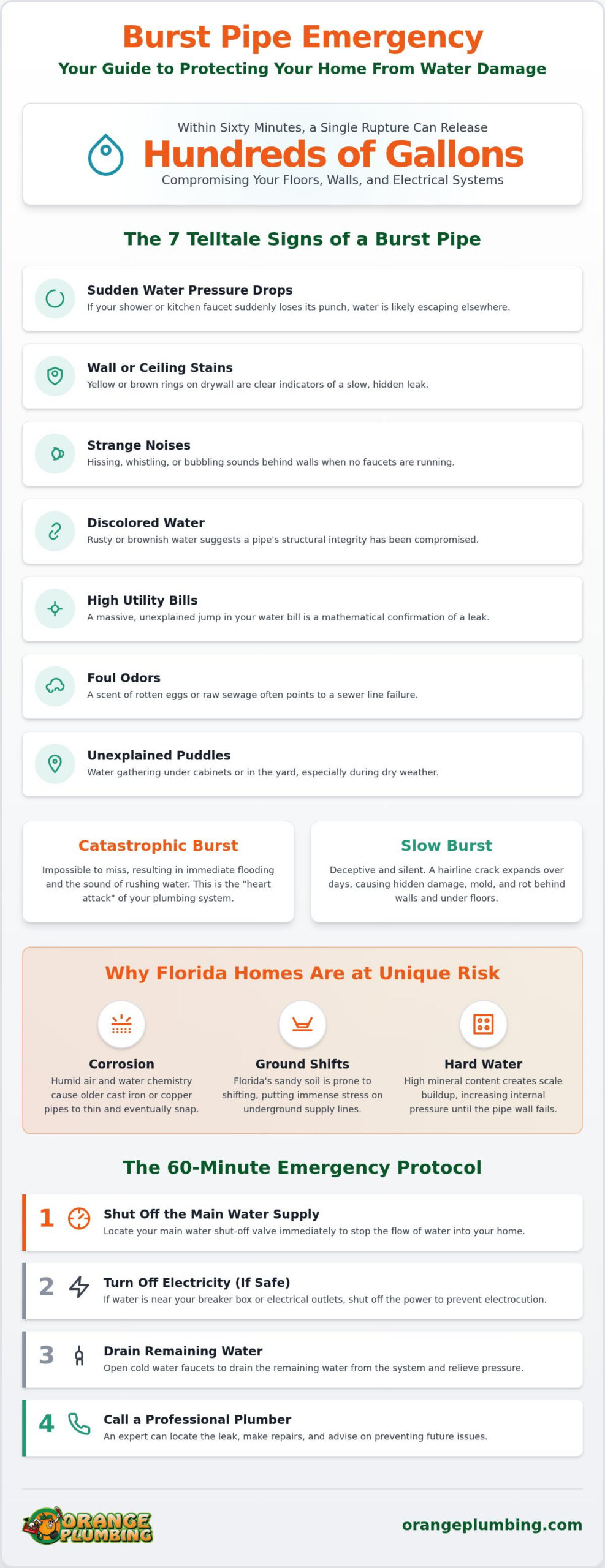
A burst pipe is a structural failure in your plumbing system that releases pressurized water into your home’s framework. It is a plumbing crisis that requires immediate intervention. This isn’t just a minor drip; it’s a high-stakes emergency. Within sixty minutes, a single rupture can release hundreds of gallons of water, compromising your floors, walls, and electrical systems. You need to act fast to prevent total property loss.
It’s vital to distinguish between a pinhole leak and a full burst. A pinhole leak is a tiny, localized failure often caused by age or minor corrosion. A full burst is a complete compromise of the pipe’s integrity. While both require leak detection and pipe repairs, a burst pipe is the “heart attack” of your plumbing system. It demands an instant response to stop the flow before the damage becomes irreversible.
Sudden vs. Gradual Bursts: What Homeowners Need to Know
A catastrophic burst is impossible to miss. It results in immediate flooding and the sound of rushing water. You’ll see the ceiling sag or water gushing from under a cabinet. However, “slow bursts” are often more deceptive. In these cases, a hairline crack expands over hours or days. These are harder to detect because the water may stay hidden behind drywall or under floorboards. By the time you notice the physical signs of burst pipe in home, the internal structural damage is often already extensive. Understanding Water Damage means recognizing that even a hidden leak can lead to mold and rot within 48 hours.
Why Florida Homes Are At Risk (Beyond Freezing Temps)
Most national advice focuses on frozen pipes. In Brevard County, we face different enemies. Our local environment presents unique challenges that can lead to a sudden pipe failure. Here is why your Florida home might be at risk:
- Corrosion: Many older homes in Titusville and Melbourne still have cast iron or copper pipes. Over decades, the humid air and chemical reactions cause these metals to thin and eventually snap.
- Ground Shifts: Florida’s sandy soil is prone to erosion and shifting. When the ground beneath your home moves, it puts immense stress on underground supply lines. If the pipe cannot flex, it will burst.
- Hard Water: High mineral content in our local water creates scale buildup. This acts like a clogged artery, narrowing the space for water flow and increasing internal pressure until the pipe wall fails.
If your plumbing is aging, you should consider professional repiping to avoid a middle-of-the-night disaster. Staying proactive is the only way to ensure your home remains dry and safe.
The 7 Telltale Signs of a Burst Pipe in Your Home
You don’t always need to see a waterfall in your living room to know a pipe has failed. In fact, many of the most destructive leaks happen silently behind your walls or under your foundation. If you suspect a problem, time is your biggest enemy. Use this checklist to identify the signs of burst pipe in home before the damage escalates.
- Sudden Water Pressure Drops: If your shower or kitchen faucet suddenly loses its punch, the water is likely escaping through a rupture elsewhere in the line.
- Unexplained Wall or Ceiling Stains: Yellow or brown rings on the drywall are clear indicators of a slow-burst pipe.
- Strange Noises: Hissing, whistling, or bubbling sounds behind the walls when no faucets are running.
- Discolored Water: Rusty or brownish water suggests a pipe has compromised its structural integrity.
- High Utility Bills: A massive jump in your water bill without a change in usage is a mathematical confirmation of a leak.
- Foul Odors: A scent of rotten eggs or raw sewage often points to a sewer line failure.
- Unexplained Puddles: Water gathering under cabinets or in the yard, especially during dry Florida weather.
One of the most reliable ways to confirm a burst is by checking your water meter. Ensure all faucets and appliances are off. If the low-flow indicator or the main dial is still spinning, you have an active leak. If you see this movement, you need professional leak detection and pipe repairs immediately to stop the flow.
Audible Clues: What Your Walls Are Trying to Tell You
Do you hear a constant hiss behind your kitchen wall? This sound is often pressurized water spraying through a small crack. You might also notice a “bubbling” sound in your drainage system or a loud banging known as “water hammer.” These noises indicate pressure irregularities that occur when a pipe has failed or is about to burst. Don’t ignore these sounds; they are your home’s early warning system.
Visual Red Flags: Tracking Water Damage and Discoloration
Visual signs often start small and expand rapidly. Look for damp spots on the flooring or soft patches in the drywall. If your tap water looks yellow, it could be pulling sediment from the ground through a break in the supply line. While Florida doesn’t face the same winter risks as northern states, the American Red Cross advice on Preventing Frozen Pipes highlights how any form of pressure stress can lead to these visual red flags. Puddles in your yard can also signal a main line break, which requires a specialized “steady hand” to fix without destroying your landscaping.
Pinpointing the Leak: Is It a Wall Burst or a Slab Leak?
Once you recognize the physical signs of burst pipe in home, your next priority is locating the failure. Not all bursts are created equal. A supply line burst involves high-pressure water that can flood a room in minutes. Conversely, a drain line failure often moves slower but carries the risk of contamination. The location of the rupture dictates the entire repair strategy. While a wall burst might require removing drywall, a slab leak requires specialized tools to access pipes buried under concrete.
Ignoring a hidden failure is a recipe for structural disaster. Because many Brevard County homes are built on concrete slabs, a “quiet” burst can erode the soil beneath your foundation for weeks before it’s noticed. This leads to shifting, cracking, and massive restoration costs. Professional leak detection is essential here. We use electronic sensors and thermal imaging to find the exact spot of the failure without tearing up your entire floor. Following the right Emergency Steps for a Burst Pipe helps minimize damage while you wait for an expert to arrive.
Identifying the Symptoms of a Slab Leak Under Your Foundation
A slab leak is one of the most deceptive plumbing emergencies. Because the pipe is buried, you won’t see a puddle immediately. Instead, look for these specific red flags:
- Warm Spots: If your tile or laminate feels unusually hot in one area, a hot water line has likely burst underneath.
- Foundation Cracks: New cracks in your baseboards or flooring often indicate the ground is shifting due to water saturation.
- The Sound of Running Water: If you hear a faint rushing sound under the house when every faucet is off, the pipe is actively leaking.
- Bill Spikes: A sudden, massive increase in your monthly water bill is often the first sign of a hidden slab failure.
If you suspect this is happening, you need a specialist in slab leak repair to stabilize your home’s foundation immediately.
Outdoor Signs: When the Burst Occurs in Your Main Line
Sometimes the crisis isn’t inside your house at all. If the main supply line between the meter and your home ruptures, the symptoms appear in your yard. Look for unusually lush, green patches of grass that grow faster than the rest of the lawn. During dry Florida weather, keep an eye out for sinkholes or soft, muddy spots where there should be dry dirt. A main line burst will also cause low water pressure at every single fixture in the house simultaneously. This is a clear indicator that the water isn’t even reaching your internal plumbing.
The 60-Minute Emergency Protocol: What to Do Immediately
When you spot the physical signs of burst pipe in home, you are officially in a race against the clock. Water damage doesn’t wait. It spreads through drywall, saturates insulation, and ruins flooring within minutes. Your priority is clear: stop the flow and secure the site. Before you reach for a bucket or a mop, you must address the source of the crisis. Safety is your first concern. If water is pooling near electrical outlets, appliances, or your main breaker panel, do not enter the room. Electricity and standing water are a lethal combination. Stay back and wait for a professional to arrive.
The “Golden Rule” of plumbing emergencies is simple: shut off the water first and ask questions later. Every minute the main valve remains open, hundreds of gallons can pour into your home’s structure. Once the flow is stopped, you can begin the process of assessment and recovery. If you are in the middle of a crisis right now, call for emergency plumbing help immediately. We provide a 60-minute response guarantee across Brevard County to ensure a steady hand is on-site before the damage becomes catastrophic.
Cutting the Flow: How to Shut Off Your Main Water Valve
You cannot wait for a plumber to arrive to stop the flooding. You must locate your main shut-off valve immediately. In most Titusville and Melbourne homes, this valve is located near the street inside a plastic or concrete box, or along the exterior wall near the garage. Once you find it, turn the handle clockwise. Remember the phrase “Righty-Tighty” to ensure you are closing it completely. If the valve is rusted or stuck, do not use excessive force. Forcing a corroded valve can cause it to snap, creating a second emergency. If it won’t budge, wait for our experts to handle it with professional-grade tools.
Mitigating Damage: Relieving Pressure and Protecting Property
Turning off the main valve stops new water from entering, but your pipes are still full of pressurized liquid. You need to drain the system to prevent further leaking from the rupture. Follow these steps to relieve the pressure:
- Open the Taps: Turn on both the hot and cold faucets at the lowest point in your house. This allows the remaining water to exit through the drains rather than the burst.
- Flush the Toilets: Flush every toilet once to empty the tanks and prevent overflow.
- Cut the Power: If water has migrated toward any electrical systems, head to your breaker box and switch off the electricity to the affected zones.
Acting quickly can save you thousands in restoration costs. If you are currently dealing with a rupture, contact us for an immediate emergency plumbing response in Brevard County. We’ll be there in 60 minutes or less to restore order to your home.
Professional Burst Pipe Repair and Long-Term Prevention
Once you’ve identified the signs of burst pipe in home and shut off the main valve, you might be tempted to attempt a DIY patch. Don’t take that risk. Plumbing systems operate under high pressure. A temporary fix often fails within hours, leading to an even more destructive flood. Florida building codes also mandate specific materials and techniques for permanent repairs. A professional fix ensures your home remains compliant and, more importantly, structurally sound. We’ve seen “quick fixes” turn into five-figure restoration bills. Don’t let that happen to you.
Orange Plumbing brings 35+ years of experience to every crisis in Brevard County. We don’t just patch a hole; we restore your peace of mind. Our team is available for emergency plumbing calls 24/7. We back our work with a 100% satisfaction guarantee, ensuring the job is done right the first time. Whether you’re in Titusville or Melbourne, we’re your neighborly experts ready to provide a steady hand when things go wrong.
Why Professional Leak Detection is the First Step
Finding the rupture is only the beginning. Often, a single burst is a symptom of a larger problem. We use specialized leak detection equipment, including acoustic sensors and thermal imaging, to see through your walls and floors. This technology allows us to pinpoint the failure without unnecessary demolition. We also ensure that the “visible” leak isn’t hiding secondary failures elsewhere in the line. This precision provides the accurate documentation your insurance company requires to process water damage claims effectively.
Repiping and Maintenance: Protecting Your Brevard County Home
In our local area, aging copper and cast iron pipes are prone to internal corrosion. While a localized repair might solve today’s emergency, it doesn’t stop the rest of your plumbing from failing. We evaluate the health of your entire system to determine if a patch is sufficient or if whole-house repiping is a better long-term investment. Modern PEX or CPVC materials are much more resistant to the hard water and humidity common in Florida. To keep your pipes healthy year-round, follow these simple maintenance tips:
- Inspect regularly: Check under sinks and near your water heater for tiny salt-like deposits or green “fuzz” on copper pipes.
- Monitor pressure: Use a simple gauge to ensure your home’s water pressure stays between 40 and 60 PSI.
- Flush the heater: Drain your water heater annually to remove sediment that can cause pressure spikes and pipe stress.
If you’re worried about the age of your plumbing, don’t wait for a disaster to strike. A proactive inspection today can save your home from a catastrophic burst tomorrow.
Protect Your Home and Restore Your Peace of Mind
A plumbing emergency is a test of speed and knowledge. Identifying the early signs of burst pipe in home can save you from a complete property loss. Remember the protocol: shut off the main water valve immediately, open your faucets to drain the pressure, and never attempt a DIY fix on a high-pressure line. Whether you’re dealing with a deceptive slab leak or a catastrophic wall burst, your quick response is the only thing standing between a minor repair and a massive restoration project.
Don’t let a rupture ruin your day or your budget. Facing a plumbing crisis? Call Orange Plumbing now for 60-minute emergency response in Brevard County! As licensed and insured Florida experts with 35+ years of local experience, we know exactly how to handle Brevard’s unique plumbing challenges. Our team provides 24/7 rapid response to ensure a steady, professional hand is on the way whenever you need it most. We’re committed to protecting your home with the same care we give our own neighbors in Titusville and Melbourne. You’ve taken the right first step by learning the signs; now let us handle the hard work of making things right again.
Frequently Asked Questions
How do I know if a pipe burst in my wall?
You’ll notice damp spots on the drywall, bubbling paint, or a sudden musty smell. Listen for hissing or whistling sounds behind the wall when no faucets are running. These are classic signs of burst pipe in home that indicate an active leak. If the wall feels soft to the touch or looks discolored, the water is already saturating the structural studs and insulation inside.
Will my homeowners insurance cover a burst pipe in Florida?
Most standard Florida policies cover sudden and accidental water damage. This typically includes the cost of water extraction and structural repairs caused by a pipe failure. However, they rarely cover damage resulting from long-term neglect or gradual wear and tear. You should document the damage with photos immediately and contact your agent to discuss your specific deductible and coverage limits for emergency plumbing repairs.
Can a pipe burst if it’s not freezing outside?
Absolutely. While freezing is rare in Brevard County, pipes fail due to corrosion, high water pressure, and shifting soil. Older copper and cast iron lines thin out over decades until they can no longer hold the pressure. Hard water minerals also create blockages that stress the pipe walls. These environmental factors make Florida homes just as vulnerable to ruptures as those in colder climates.
How long can I wait to fix a burst pipe?
You can’t afford to wait even a few hours. Water begins damaging drywall and flooring instantly, and mold spores can start colonizing the area within 24 to 48 hours. Delaying the repair increases the risk of permanent structural rot and drives up restoration costs. We recommend calling for professional help the moment you confirm the flow has been shut off at the main valve.
What is the most common cause of burst pipes in Brevard County?
Corrosion is the primary culprit for many signs of burst pipe in home throughout Titusville and Melbourne. Our local coastal environment and hard water accelerate the breakdown of older metal plumbing. Additionally, Florida’s sandy soil is prone to shifting and erosion, which puts immense physical stress on underground supply lines. When these pipes can’t flex with the moving ground, they eventually snap, leading to slab leaks.
How much water damage can a burst pipe cause in an hour?
A standard residential pipe can release hundreds of gallons of pressurized water every hour. This volume is enough to flood an entire floor, ruin your furniture, and compromise the electrical wiring inside your walls. The sheer weight of the water can also cause ceilings to sag or collapse. Fast intervention is the only way to stop this level of destruction and save your property.
Should I turn off my water heater if a pipe bursts?
Yes, you must turn off the electricity or gas to your water heater. If a pipe bursts and the tank empties, the heating elements will continue to run without water. This can cause the unit to overheat, burning out the elements or creating a serious fire hazard. Shutting down the heater is a vital part of securing your home during any major plumbing crisis.
How can I find my main water shut-off valve?
Most Brevard County homes have the main shut-off valve located near the street in a concrete or plastic meter box. You might also find a secondary valve on the exterior wall near your garage or where the main line enters the house. Look for a round wheel handle or a straight lever. Turn it clockwise to stop the flow. If you can’t find it, we can help.